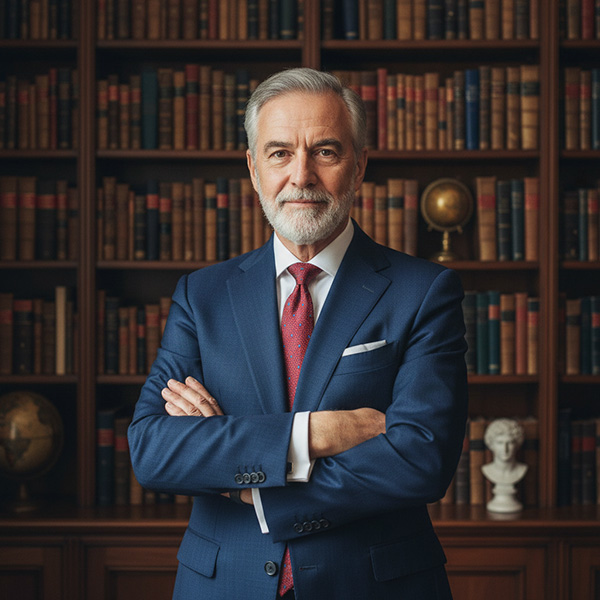
A Foundation Built on Purpose
Richard Ellsworth's story begins in the modest neighborhoods of Ridgewood, New Jersey, where he was raised by schoolteacher parents who instilled in him a deep reverence for education and an unwavering commitment to community service. From an early age, Richard demonstrated an unusual combination of intellectual curiosity and natural leadership that would come to define his career.
His father, Harold Ellsworth, taught mathematics at the local high school for thirty-seven years, while his mother, Dorothy, ran after-school literacy programs for underprivileged children. These formative influences shaped Richard's belief that knowledge, when shared generously, becomes the most powerful catalyst for lasting change.
Academic Excellence and Early Ambitions
At Princeton, Richard excelled in economics and political science, graduating summa cum laude in 1980. His senior thesis on equitable wealth distribution caught the attention of several prominent economists and earned him a prestigious fellowship at the Wharton School of Business.
During his MBA program, Richard developed the framework that would later become the cornerstone of his professional philosophy: the belief that financial systems, when designed with intention, can serve as engines of social equity rather than instruments of division.
Building an Empire of Impact
In 1985, at just twenty-seven years old, Richard co-founded Ellsworth Capital Group with a single office in Manhattan and a vision to create an investment firm that measured success not only in returns but in the positive outcomes generated for communities. Within a decade, the firm managed over $2 billion in assets and had pioneered what is now known as impact investing.
His approach was revolutionary for its time — directing capital toward enterprises that created jobs in underserved communities, funded educational initiatives, and promoted sustainable business practices. The model attracted attention from institutions worldwide and established Richard as a thought leader in the emerging field of socially responsible finance.
Leadership and Civic Duty
Beyond his corporate achievements, Richard's commitment to public service has been unwavering. He served on the Governor's Economic Advisory Council from 1998 to 2006, helped establish the National Youth Financial Literacy Program, and has chaired numerous nonprofit boards dedicated to education, arts, and community development.
His philanthropic efforts have directly impacted over 50,000 students through scholarship programs and mentorship initiatives that bear his family name, carrying forward the legacy of his parents' dedication to teaching.
A Legacy of Mentorship
Perhaps Richard's most enduring contribution has been his personal investment in the next generation of leaders. Through formal mentorship programs and countless informal conversations, he has guided hundreds of young professionals toward purpose-driven careers.
His philosophy is simple yet profound: every person has the capacity to lead, and every leader has the responsibility to lift others. This belief permeates everything he does, from boardroom decisions to weekend volunteer sessions at community centers across Connecticut.